Draft Sharks Fantasy Football
3.4 305.00 Reviews
Analysis By AppCompare
I approached Draft Sharks Fantasy Football as a practical decision rather than a quick download. The app is aimed at fantasy football managers who want help before and during a draft, especially when rankings, advice, and planning tools need to sit in one place. My first impression is that it makes the most sense for someone who enjoys making the final call but does not want to build a draft strategy from scattered notes, browser tabs, and last-minute opinions.
It is a free sports app from Draft Sharks, with an Everyone age rating and support for Android devices running at least version 7.0. The app has been available since May 7, 2015, and its current version is 4.7. That history matters to me because this is not a brand-new experiment; it is an established fantasy football companion that has had time to find its audience. At the same time, its average rating is 3.4 from around 500 ratings, so I would not treat it as a universally polished experience.
How I would decide whether it belongs in my fantasy football routine
The key question is not simply whether I play fantasy football. It is how I prepare. If I want a simple list of player names and intend to follow it without thinking, this app may offer more guidance than I need. If I want to compare options, understand the shape of a draft, and keep advice close while making decisions, it becomes more interesting.
I would judge it on four practical points: how quickly I can find useful rankings, whether its tools help me make decisions rather than merely display information, how well its advice fits my league, and whether the app is comfortable enough to use when the draft is moving quickly. Fantasy football drafts punish hesitation. A resource can be knowledgeable and still be frustrating if it takes too many taps to reach the information I need.
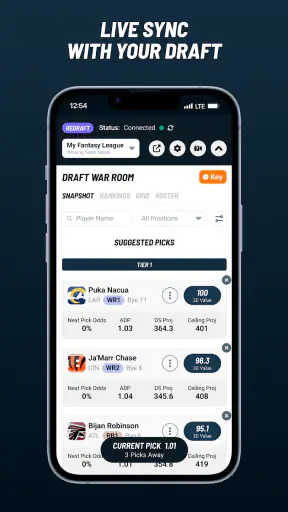
The app’s focus is clear. It is not a general sports-news reader, a social league platform, or a full replacement for the fantasy service where a league is hosted. I see it as a preparation and decision-support layer. That distinction prevents disappointment: I would use it to shape my plan and evaluate choices, while continuing to use my normal league platform for league administration and roster actions.
For a first-time manager, the appeal is having a starting point. Rather than opening a blank spreadsheet and wondering how to rank every position, I can begin with expert guidance and then adjust it to my own preferences. For an experienced manager, the value is different. I can use the app as a second opinion, a way to challenge an instinctive pick, or a quick reference when the draft does not follow my expected script.
What I look for before draft day
I would not wait until the draft room opens to learn the app. The most useful workflow is to explore its rankings and advice beforehand, then turn that information into a short personal plan. I might identify players I am willing to target, positions where I can wait, and situations where I should avoid chasing a name simply because several managers have just selected from the same group.
One non-obvious benefit of using a dedicated draft app is that it can expose the difference between a player I like and a player who fits my roster construction. Those are not always the same thing. A favorite player may be a poor selection if I have already taken too many players at that position or if the next reasonable options are likely to disappear before my next turn. I would use the app to keep that broader draft context in mind.
I also recommend treating rankings as a framework, not an automatic command. A ranking can help me notice value, but it cannot fully understand my league’s scoring rules, roster requirements, keeper decisions, or personal risk tolerance unless those details are reflected in the way I use the advice. The strongest workflow is to combine the app’s perspective with the rules of my specific league.
Where the app is strongest
The biggest strength is concentration. Fantasy football research is often spread across articles, spreadsheets, podcasts, browser pages, and league screens. Draft Sharks Fantasy Football gives me a focused place to begin, which is especially useful when I want to prepare without spending an entire evening collecting material from several sources.
I also like the idea of combining rankings, tools, and advice instead of relying on a single list. A ranking tells me relative order, but advice can help explain how to react when the draft changes. Tools can encourage a more structured process. Even when I disagree with a recommendation, having a clear reference point is useful because it forces me to identify why I am deviating.
That makes the app valuable in a realistic situation. Imagine I am working during the day and my league draft starts after dinner. I have limited time, so I review the rankings earlier, mark the positions I want to prioritize, and keep the app available during the draft. When another manager takes a player I expected to select, I do not need to panic or search the web from scratch. I can look at the remaining options, compare them with my plan, and choose whether to follow the next recommendation or change direction.
The real advantage is not picking a perfect roster automatically; it is reducing avoidable hesitation. That is an important difference. The app can make my process calmer and more consistent, but it cannot remove the uncertainty that makes fantasy football interesting.
Three ways I would use it beyond a basic rankings check
First, I would use it to build tiers in my own notes. A long ranking can create the illusion that the difference between consecutive players is meaningful. In practice, several players may feel interchangeable, while a larger gap may exist after a particular group. By studying the app’s ordering and advice, I can create rough tiers and decide when a position is about to thin out. That is more useful than blindly selecting the highest remaining name.
Second, I would use it as a disagreement detector. If my personal list differs sharply from the app’s guidance, I would not immediately assume either side is wrong. I would ask whether the difference comes from a scoring rule, a roster need, a preference for safety, or simple overconfidence. This turns the app into a review tool for my thinking rather than a substitute for it.
Third, I would use it after mock drafts or practice planning. Instead of only asking whether I selected recognizable players, I would compare the decisions with the app’s broader recommendations. Did I wait too long at a thin position? Did I reach for a player because I was worried about missing out? Did my plan collapse after one unexpected run? This kind of review can improve my process more than memorizing another list of names.
Where the experience may create friction
The rating of 3.4 suggests that the experience will not satisfy everyone equally, and I would keep that expectation in mind. A focused fantasy football app has a narrow purpose, so any awkward navigation, dated presentation, or mismatch with a user’s league habits can feel more noticeable. When I am drafting, I value speed and clarity above visual extras.
Another limitation is that advice can become less useful when I apply it without context. Fantasy football leagues vary widely. A recommendation that makes sense for one scoring format may not fit another, and a draft plan that works in a shallow league may be less suitable in a deeper one. I would verify my league settings separately and use the app as informed guidance rather than assuming every recommendation is universal.
There is also a mental cost to consulting too many tools. If I keep checking every suggested move, I can become slower and less decisive. My solution would be to establish rules before the draft: which positions I am comfortable waiting on, how much I value upside, and when I will ignore a ranking because my roster needs have changed. The app should support those rules, not replace them.
How it compares with the usual alternatives
The usual alternative is a general web search. That approach offers breadth, but it can scatter attention across different opinions and formats. Draft Sharks Fantasy Football is more appealing when I want a dedicated fantasy football reference rather than a collection of unrelated pages. The trade-off is that a general search may be better when I need a very specific league question, breaking information, or a perspective outside the app’s central approach.
Another alternative is a spreadsheet. A spreadsheet gives me maximum control. I can add custom tiers, notes, league settings, personal projections, and reminders. For managers who enjoy building their own systems, that flexibility may be worth the effort. The app is better for getting started quickly and consulting prepared rankings and advice, while a spreadsheet is better for someone who wants to maintain a highly personalized model.
Some managers rely mainly on podcasts, articles, or social media discussions. Those formats can provide context and personality, but they are not always convenient during a fast-moving draft. The app’s advantage is its more direct relationship with the decision in front of me. The disadvantage is that a written or spoken source may explain reasoning in greater depth or offer a wider range of viewpoints.
I would also distinguish it from the fantasy league platform itself. The platform where my league is hosted is essential for entering picks, tracking rosters, and seeing league activity. Draft Sharks Fantasy Football serves a different purpose. I would keep both available rather than expecting one to replace the other. If I only want to manage an existing team and never prepare with rankings or tools, the dedicated app may not add enough value.
Who should use it, and who should skip it
I think it is a good fit for a manager who wants a free starting point, prefers organized fantasy football guidance, and is willing to make personal adjustments. It is particularly useful for casual players who want to feel prepared without designing a complete draft model. It can also help experienced players who like comparing their own instincts with another structured viewpoint.
I would be more cautious if I play a highly customized league and expect every recommendation to account perfectly for unusual scoring, roster, or keeper rules. In that case, a personal spreadsheet or a more specialized resource may fit better. I would also skip it if I dislike rankings-based preparation altogether or if I want a social league community, live conversation, or full roster management in the same place.
The free price lowers the risk of trying it, but free does not mean frictionless. I would still spend a short session learning where the information I need is located before relying on it on draft night. That small preparation step matters because switching between unfamiliar screens while managers are making selections can undermine the very confidence the app is meant to provide.
The cost of changing my draft routine
Moving from a familiar spreadsheet, website, or notes system to an app has a real switching cost. I may need to rebuild my tiers, decide which advice I trust, and learn how the app presents its information. If I already have a carefully maintained process, the app will not automatically improve it. Its value depends on whether it saves time or improves decisions enough to justify adding another reference point.
My recommendation would be to test it in parallel rather than replacing everything immediately. I would prepare with my usual method, then compare the app’s rankings and advice against my plan. If the differences reveal useful blind spots, I would keep it as a second opinion. If it only creates confusion or repeats information I already organize better, I would not force the change.
This trial approach is also sensible because the app has a modest average rating rather than a near-unanimous reception. I would judge it by my own workflow: how quickly I can find what matters, whether the recommendations help me make clearer choices, and whether I feel more prepared after using it. Those answers matter more than assuming that a popular category automatically means a perfect personal fit.
My recommendation after using it as a decision tool
I would recommend Draft Sharks Fantasy Football to fantasy managers who want a free, focused resource for draft preparation and who understand that rankings are guidance rather than guarantees. Its combination of rankings, tools, and advice gives me a practical foundation, and the app is most useful when I turn that foundation into personal tiers, position priorities, and backup plans.
I would not recommend making it the only authority in a league with unusual rules, nor would I expect it to replace the service that hosts my league. Managers who prefer complete customization may get more from a spreadsheet, while people who want broad discussion may prefer articles, podcasts, or community spaces. The better choice depends on whether convenience or control matters more to me.
For my own routine, I would install it before draft day, review its guidance early, write down the decisions I want to make deliberately, and keep the app nearby as a reference rather than a command center. With that approach, it earns a place in my fantasy toolkit. The app will not draft for me, but it can make the preparation more organized and help me respond when the draft inevitably refuses to follow my plan.
Draft Sharks, the developer behind this sports app, has created something aimed at a specific fantasy football need rather than trying to cover every kind of sports activity. That focus is its main reason to try it. If I want a practical companion for thinking through a draft and I am comfortable applying my own judgment, the free download is easy to justify. If I need a fully customized system or a complete league-management experience, I would choose a different primary tool and use this only as a supplementary reference.
FAQ
What is Draft Sharks Fantasy Football, and who is it designed for?
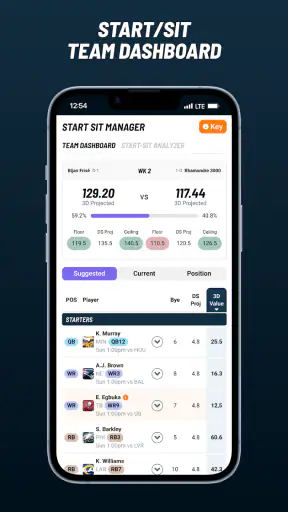
Draft Sharks Fantasy Football is a planning and analysis app for fantasy football managers who want more help preparing for drafts and managing their teams. It is designed for both newer players and experienced users, offering projections, rankings, draft advice, player information, and strategy tools intended to support decisions before and during a fantasy football season.
Does Draft Sharks Fantasy Football work with my fantasy league?
The app is primarily a companion and research tool rather than a replacement for your league host. Compatibility and available features can depend on the platform, league format, subscription level, and current app integrations. Before downloading, check whether your league settings, scoring system, roster configuration, and preferred fantasy platform are supported by the latest version.
What features can I use in Draft Sharks Fantasy Football?
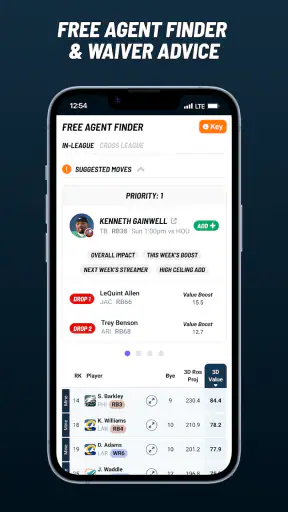
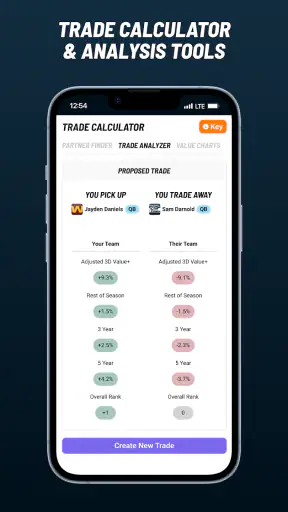
Depending on the version and plan, Draft Sharks Fantasy Football may provide customizable rankings, projections, draft preparation tools, player comparisons, injury or news context, waiver guidance, and lineup or roster analysis. These features are meant to help you evaluate choices more efficiently, although they should be treated as recommendations rather than guaranteed predictions.
Is Draft Sharks Fantasy Football free to download and use?
The app may be available to download at no initial cost, but some of its more advanced analysis, premium rankings, projections, draft tools, or season-long advice can require a paid subscription or in-app purchase. Review the current pricing, trial terms, renewal conditions, and cancellation process in the app store before starting a subscription.
Can Draft Sharks Fantasy Football guarantee better results or a fantasy championship?
No fantasy football app can guarantee winning results because player performance, injuries, coaching decisions, matchups, and unexpected game events are impossible to predict perfectly. Draft Sharks can make research more organized and provide data-driven guidance, but the final decisions remain yours. Use its recommendations alongside league rules, current news, and your own judgment.
Pros
- Detailed player projections help with draft-day decisions.
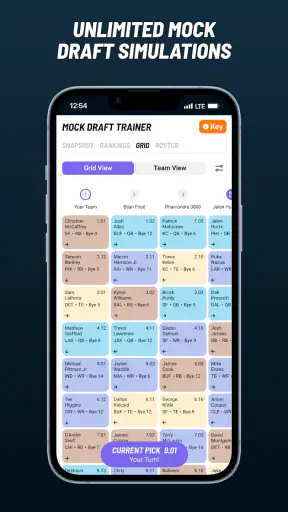
- Mock drafts make it easy to test different roster strategies.
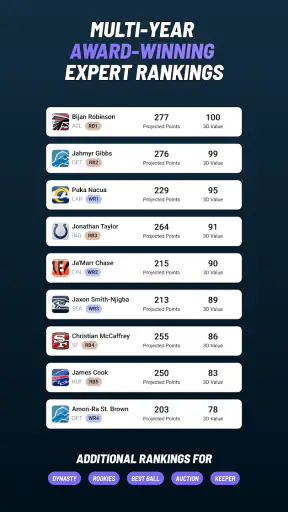
- Useful rankings and tiers can speed up player comparisons.
- Content is tailored specifically to fantasy football formats.
- Regular updates can help track changing player values.
Cons
- Many premium tools require a paid subscription.
- The interface may feel dense for first-time fantasy players.
- Advice is focused mainly on football rather than broader sports.
- Some features may be less useful outside draft season.
- Projections are opinions and cannot guarantee fantasy success.